Suzy Rent joins NVIDIA Inception Program to modernize renting in the Philippines
6 min read
08/21/2026Loading...
Loading...
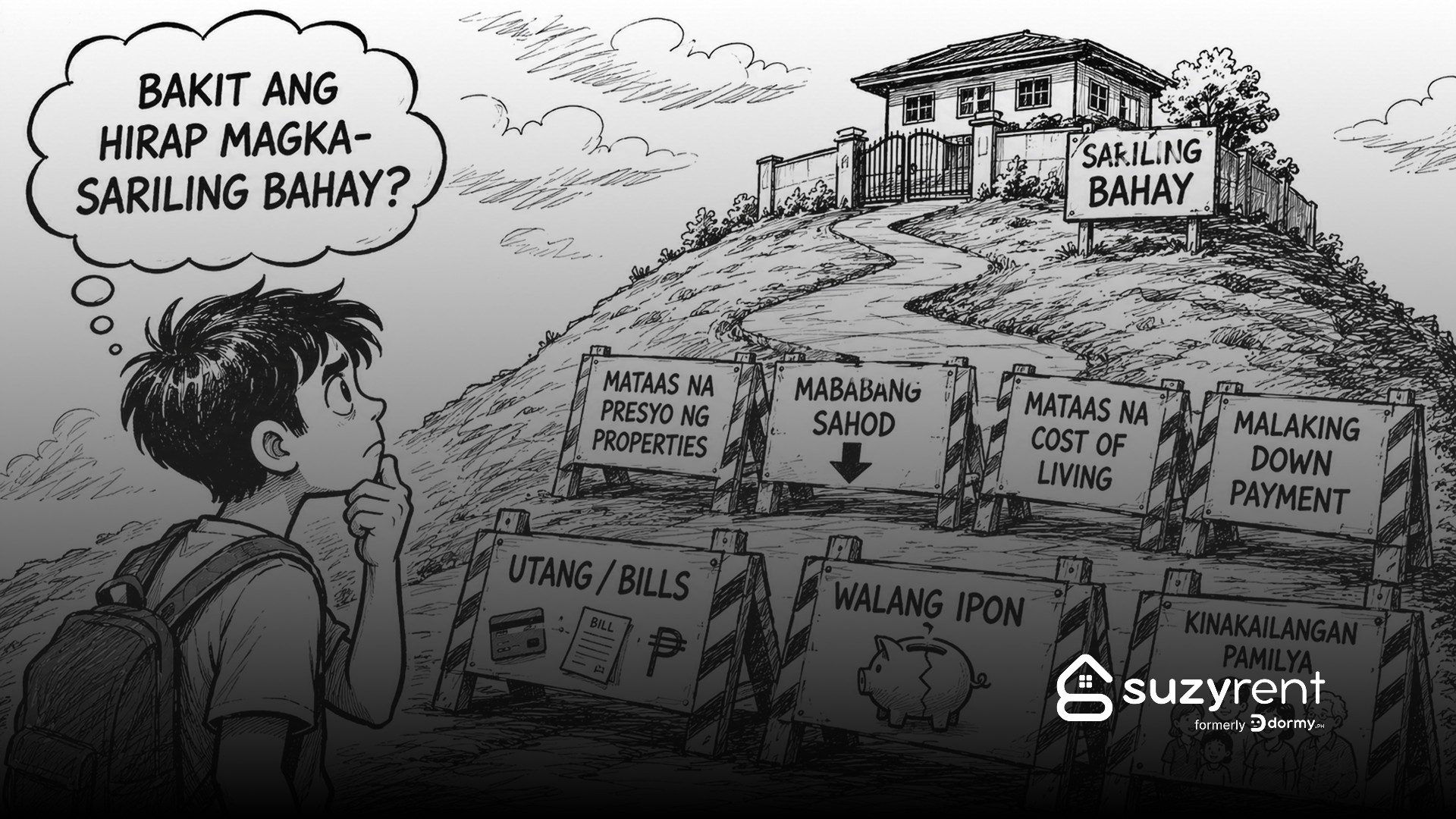
For many Filipinos, owning a home has long been seen as a major life milestone. It's often associated with stability, success, and financial security. Previous generations were able to buy land, build a house, or secure a mortgage while raising a family. Today, however, many young adults feel like that same goal is moving further away.
Whether you're a fresh graduate, a young professional, or someone already several years into your career, the gap between income and property prices can feel overwhelming. The question isn't just "When can I buy a house?"—it's increasingly becoming "Will I ever be able to?"
The reality is that homeownership has become significantly more challenging for young Filipinos, and it's not simply because people are spending too much on coffee or travel. Several economic and social factors are reshaping the housing landscape.
One of the biggest reasons homeownership feels unattainable is the widening gap between salaries and real estate prices.
Over the past decade, property values in many parts of the Philippines—especially in Metro Manila and surrounding growth areas—have increased much faster than average wages. While salaries have risen gradually, housing costs have often jumped by hundreds of thousands or even millions of pesos.
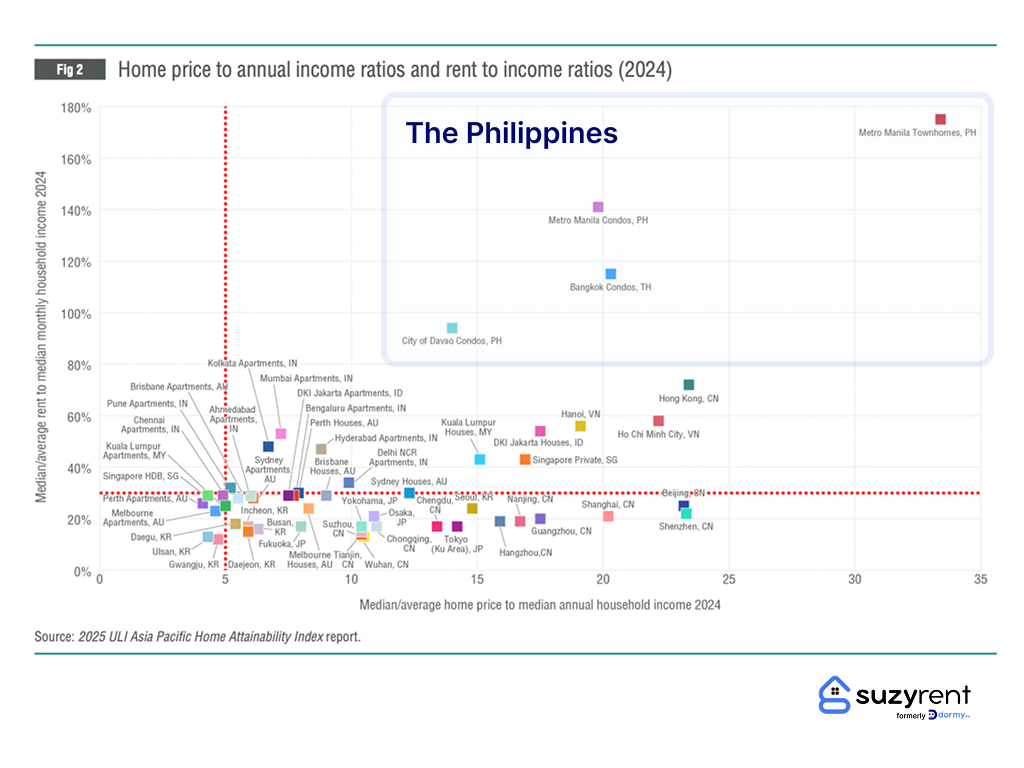
For many young professionals, saving for a down payment can take years. By the time they reach their savings goal, property prices may have increased again, pushing the target even further away.
Most housing loans require a significant down payment upfront. Even a modest condominium or house-and-lot can require hundreds of thousands of pesos before financing begins.
For someone earning an average salary while covering daily expenses, transportation, family obligations, and emergency savings, accumulating that amount can feel nearly impossible.
Housing isn't the only expense getting more expensive.
Food, utilities, transportation, healthcare, and other essentials continue to consume a larger share of monthly income. Inflation reduces purchasing power, leaving less room for long-term savings goals.
Many young Filipinos are finding themselves in a situation where they're financially responsible but still unable to save aggressively enough for property ownership.
READ: Numbeo Analysis: Cost of Living in the Philippines
Unlike in some countries where young adults primarily support themselves, many Filipinos contribute to their family's finances.
This can include:
Helping parents with household expenses
Funding younger siblings' education
Contributing to medical bills
Supporting relatives during emergencies
These responsibilities are deeply rooted in Filipino culture, but they can also make large financial goals like homeownership harder to achieve.
READ: Inquirer: Why Being a Breadwinner isnt a Piece of Cake
Career opportunities remain concentrated in major urban centers.
Unfortunately, the closer a property is to business districts, transportation hubs, and commercial areas, the more expensive it tends to be. Young professionals often face a difficult choice:
Buy an affordable property far from work
Continue renting closer to employment opportunities
Spend years saving while hoping for better options
For many, long commutes and traffic make distant homeownership less attractive, even if the property itself is more affordable.
Student expenses, personal loans, credit card balances, and emergency financial obligations can limit borrowing capacity.
Even when someone qualifies for a housing loan, the prospect of committing to decades of monthly payments can feel intimidating.
Young adults today are also more aware of financial risks. Many have witnessed economic uncertainty, layoffs, and rising costs, making them cautious about taking on large debts.
Not every young Filipino is delaying homeownership solely because of affordability.
Some are intentionally choosing flexibility.
Remote work, freelance careers, entrepreneurship, and the desire to explore different cities have made renting more appealing for certain groups. Instead of locking themselves into a long-term mortgage, they prefer housing arrangements that can adapt to changing circumstances.
This doesn't mean they don't want a home someday. It simply means that ownership is no longer the only path to stability.
For previous generations, renting was often viewed as a temporary stage before buying a home.
Today, many young Filipinos see renting differently.
Renting can provide:
Lower upfront costs
Flexibility to relocate
Access to desirable locations
Less responsibility for maintenance
More room to build savings and investments
As housing affordability challenges continue, long-term renting is becoming a practical choice rather than a fallback option.
One of the biggest misconceptions is that renting automatically means financial failure.
The truth is that everyone's situation is different. Some people prioritize mobility, career growth, or business opportunities before purchasing property. Others may choose to invest their money elsewhere while waiting for the right time to buy.
Financial progress isn't defined by whether you own a home by a certain age.
While the housing market presents real challenges, there are still ways to move closer to long-term housing goals.
Before thinking about a down payment, create a financial safety net. Unexpected expenses can quickly derail savings plans.
Understand Your Budget
Knowing how much housing you can realistically afford prevents overcommitting to a mortgage later.
Explore Different Locations
Properties outside major business districts may offer better value, especially as infrastructure and transportation improve.
Consider Renting Strategically
A well-located rental can provide convenience and flexibility while you continue building savings.
Focus on Financial Growth
Increasing income through career advancement, side projects, or additional skills can often have a bigger impact than extreme budgeting alone.
Homeownership feels impossible for many young Filipinos because the challenges are real. Property prices have risen faster than incomes, the cost of living continues to climb, and financial responsibilities are more complex than ever.
But the conversation around housing is also evolving. Owning a home remains a worthwhile goal for many, yet it's no longer the only measure of success. Renting, house-sharing, and flexible living arrangements are becoming increasingly practical options for a generation navigating a very different economic reality.
The dream of having a place to call your own isn't gone, it may simply require a different timeline, a different strategy, or a different definition than it did for previous generations.