Suzy Rent joins NVIDIA Inception Program to modernize renting in the Philippines
6 min read
08/21/2026Loading...
Loading...
Moving out used to mean one thing: getting your own place and enjoying complete independence, but today, that's changing.
Across Metro Manila, Cebu, Davao, and other growing cities, more young Filipinos are choosing to live with roommates instead of renting a place alone. Whether they're fresh graduates starting their first job, young professionals building their careers, digital nomads, or entrepreneurs trying to keep costs manageable, shared living has become less of a compromise and more of a lifestyle choice.
It's not just about saving money anymore. For many Filipinos, having roommates offers flexibility, community, convenience, and a better overall quality of life.
So what's driving this shift?
One of the biggest reasons young Filipinos are turning to roommate arrangements is simple: affordability.
Rent prices in major cities continue to rise, especially in areas close to business districts, universities, and transportation hubs. Renting a studio or one-bedroom unit alone can easily consume a significant portion of a young professional's monthly income.
When rent, utilities, internet, groceries, transportation, and daily expenses are combined, solo living can quickly become financially overwhelming.
With roommates, costs are shared across multiple people, making it possible to:
Rent in better locations
Access larger living spaces
Split utility bills
Reduce monthly living expenses
Save more for future goals
Instead of spending half their salary on rent, many young renters are using shared living as a way to build savings, travel more, invest, or simply enjoy a better work-life balance.
Anyone who has experienced Metro Manila traffic understands the value of living close to work.
Many young professionals would rather share a condo near Makati, BGC, Ortigas, or Quezon City than rent a cheaper solo apartment several hours away.
By sharing housing costs with roommates, renters can often afford locations that would otherwise be out of reach.
The benefits are significant:
Less time commuting
Lower transportation expenses
More personal time
Better work-life balance
Reduced daily stress
For many, sharing a home is a worthwhile trade-off if it means getting back two or three hours of their day.
Young adulthood comes with plenty of financial responsibilities.
Many Filipinos are balancing:
Student loans or educational expenses
Family support obligations
Career development costs
Emergency savings goals
Lifestyle spending
Because shared living reduces housing costs, it creates breathing room in the budget.
Rather than feeling trapped by monthly rent payments, renters can allocate money toward things that improve their future, such as professional certifications, side businesses, investments, or travel experiences.
In a generation that values flexibility and financial wellness, roommates offer a practical solution.
Living alone sounds exciting at first.
But many young renters discover that solo living can sometimes feel isolating, especially when moving to a new city.
Roommates provide built-in social interaction that can make a new environment feel more welcoming.
This is particularly valuable for:
New graduates relocating for work
Employees transferred to different cities
Freelancers working remotely
Individuals living far from family
Having someone to talk to after work, share meals with, or simply coexist alongside can make daily life feel more connected.
While roommates don't automatically become best friends, many shared-living arrangements lead to meaningful friendships and support systems.
Young Filipinos are increasingly prioritizing flexibility.
Many no longer see housing as a long-term commitment. Instead, they prefer living arrangements that allow them to adapt quickly to changes in work, income, relationships, and personal goals.
Roommate setups often offer:
Lower move-in costs
Reduced financial risk
Greater mobility
Easier relocation opportunities
This flexibility is especially appealing in industries where career opportunities can change rapidly.
Rather than locking themselves into expensive solo leases, renters can explore different neighborhoods and living situations without carrying the full financial burden alone.
Another overlooked benefit of having roommates is access to better living spaces.
The cost of a small studio apartment can sometimes equal a shared unit with significantly more room and amenities.
By splitting expenses, roommates may gain access to:
Multiple bedrooms
Larger kitchens
Common workspaces
Building amenities
Better security features
More comfortable living environments
For remote workers and hybrid employees, extra space can significantly improve productivity and quality of life.
Living with trusted roommates can also create a greater sense of security.
For many renters, especially those moving away from home for the first time, having housemates nearby offers peace of mind.
Benefits may include:
Someone available during emergencies
Shared responsibility for the household
Added awareness of visitors and deliveries
Greater confidence when living in a new area
While every living arrangement is different, many renters appreciate having another person around rather than living completely alone.
Globally, shared living has evolved into a lifestyle trend, and the Philippines is following a similar path. The rise of rental providers like MyTown, The Grid, lyf, and other lifestyle and co-living focused properties is proof of this new reality.
Simply put, young renters increasingly value experiences and relationships over simply having a private space.
Modern roommate arrangements often create mini-communities where residents:
Share resources
Exchange ideas
Network professionally
Support each other's goals
Build friendships
For many Gen Z and Millennial renters, this sense of community is a major advantage.
Housing is no longer just about where you sleep. It's becoming part of how you connect, grow, and build your life.
One reason shared living is becoming more popular is that finding compatible roommates is easier than ever.
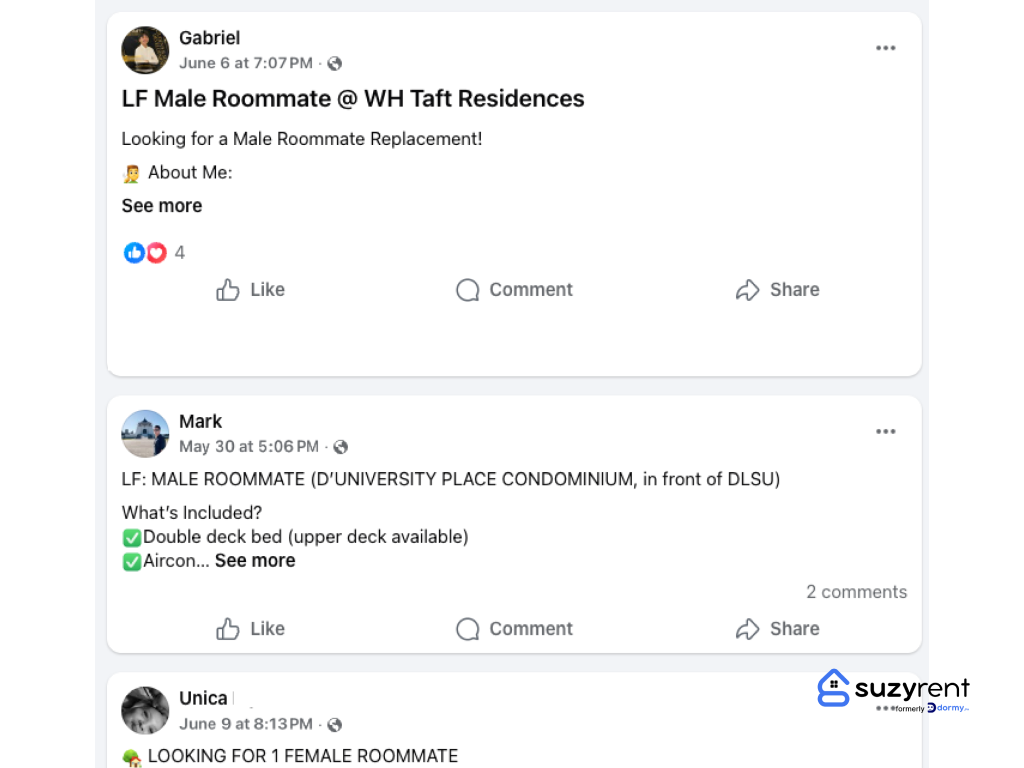
Social media groups on Facebook, and online rental platforms like Suzy Rent now allow users to:
Browse roommate-friendly listings
Connect with potential housemates
Compare budgets and preferences
Find housing options in specific locations
Instead of relying solely on personal referrals, renters can access a wider range of housing opportunities that fit their lifestyle and budget.
This convenience has made roommate living much more accessible than it was a decade ago.
Roommate living isn't perfect for everyone.
Some people value privacy above all else and prefer living alone. Others thrive in shared environments where costs, responsibilities, and experiences are shared.
If you're considering living with roommates, ask yourself:
Do I want to reduce my housing expenses?
Would I benefit from living closer to work or school?
Am I comfortable sharing common spaces?
Do I value flexibility in my living arrangement?
Would having a built-in social circle improve my experience?
If you answered yes to most of these questions, shared living may be worth exploring.
The growing popularity of roommates among young Filipinos reflects broader changes in how people approach housing, finances, and lifestyle choices.
While affordability remains a major factor, the appeal goes beyond saving money. Shared living offers flexibility, community, convenience, and access to better locations and amenities.
As cities become more expensive and young professionals seek smarter ways to balance independence with financial stability, roommate living is likely to remain one of the most practical and attractive housing options in the Philippines.
For many renters today, living with roommates isn't settling for less—it's choosing a lifestyle that makes more sense.